

Selecting the right bike size doesn’t have to be complicated. This guide breaks down how different bikes are measured. It also offers fitting tips for men, women and kids.
A professional fitting at a bike shop is always ideal. But not when you’re buying bikes online or through a marketplace.
So, if that’s not an option, use this guide to assess your needs and choose a suitable size.
If you want to jump straight to sizing, use the table of contents to find your section. If you’d rather get the full context and tips, read on for the complete guide.
Contents
What Size Bike Do I Need?
Bike sizing might seem tricky because there isn’t a universal system that works for every bike and every rider. Adult bikes are usually sized by frame, while kids’ bikes use wheel size, and road and mountain bikes follow their own standards.
A professional bike fitting at a local shop will give you the most accurate results. But if you’d rather start on your own, the charts and tips in this guide will help you narrow down the right size.
What and How to Measure
If you want to know what size bike frame do you need, you need two measurements: height and inseam.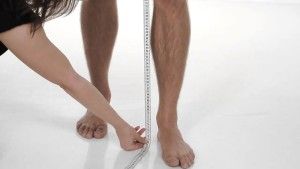
Why inseam matters: it ensures the right standover height—you want 1–2″ clearance between your crotch and the top tube for comfort and safety.
What you need: tape measure, book, ~30 seconds.
- Height: stand against a wall, place a book on your head, measure floor to book.
- Inseam: shoes off, feet hip-width, measure from floor to crotch.
Write them down, and you’re ready to size your bike.
Is Women’s Bike Sizing And Different?
Some bicycle brands produce women-specific models, often with features like narrower handlebars, shorter stems, or saddles designed for female anatomy. These adjustments can improve comfort, but when it comes to sizing, there is no fundamental difference between men’s and women’s bikes.
Both use the same frame measurements, and the same charts apply to all adult riders. The key is to start with the correct frame size and then fine-tune the fit with components such as the saddle, stem, or handlebars.
This approach ensures women get just as precise and comfortable a fit as men, whether they choose a women-specific design or a standard model.
Differences in Bike Types
Bike sizing isn’t universal.
Sizing can differ between bike types and even from one brand to another.
Road bikes and mountain bikes often use different numbers for the same rider height, which can be confusing. In the past, sizes were based on frame parts like the seat tube.
As bike designs evolved, manufacturers updated their systems to match modern geometry.
The idea was to simplify things, but because some brands still use older methods, you’ll see mixed sizing standards today. Always check the chart for your specific bike style to make sure the fit is right.
Important Info About Bike Size Charts

The charts below cover road, mountain, hybrid, and kids’ bikes.
There’s no single chart that works for every brand or style, since each uses slightly different measurements.
Use these charts as a starting point to find your general size, then double-check with the brand’s own chart for the most accurate fit.
Each chart in this guide works as a simple bike size graph, helping you compare height, inseam, and frame size at a glance. So let’s start
Road / E-Road / Gravel / Adventure Bike Size Chart
Road, gravel, and adventure bikes all use centimeter-based frame sizing, and their charts overlap closely. While gravel and adventure frames may have slightly different geometry for stability and comfort, the starting point is the same as for road bikes. Use the chart below to match your height with the right frame size.
| Frame Size (cm) | Rider Height (ft/in) | Rider Height (cm) | Alpha Size |
|---|---|---|---|
| 47–48 cm | 4’10”–5’0” | 148–152 cm | XXS |
| 49–50 cm | 5’0”–5’3” | 152–160 cm | XS |
| 51–53 cm | 5’3”–5’6” | 160–168 cm | S |
| 54–55 cm | 5’6”–5’9” | 168–175 cm | M |
| 56–58 cm | 5’9”–6’0” | 175–183 cm | L |
| 58–60 cm | 6’0”–6’3” | 183–191 cm | XL |
| 61–63 cm | 6’3”–6’6” | 191–198 cm | XXL |
This gives you a good ballpark reference, but geometry can differ between brands, so it’s always worth checking the specific model chart for the best fit.
If you fall between two sizes, consider these tips:
Size up if:
- Your arms are long, or your wingspan is greater than your height
Size down if:
- You want a bike that feels lighter and stiffer (good for sprinters)
- You prefer a more upright riding position
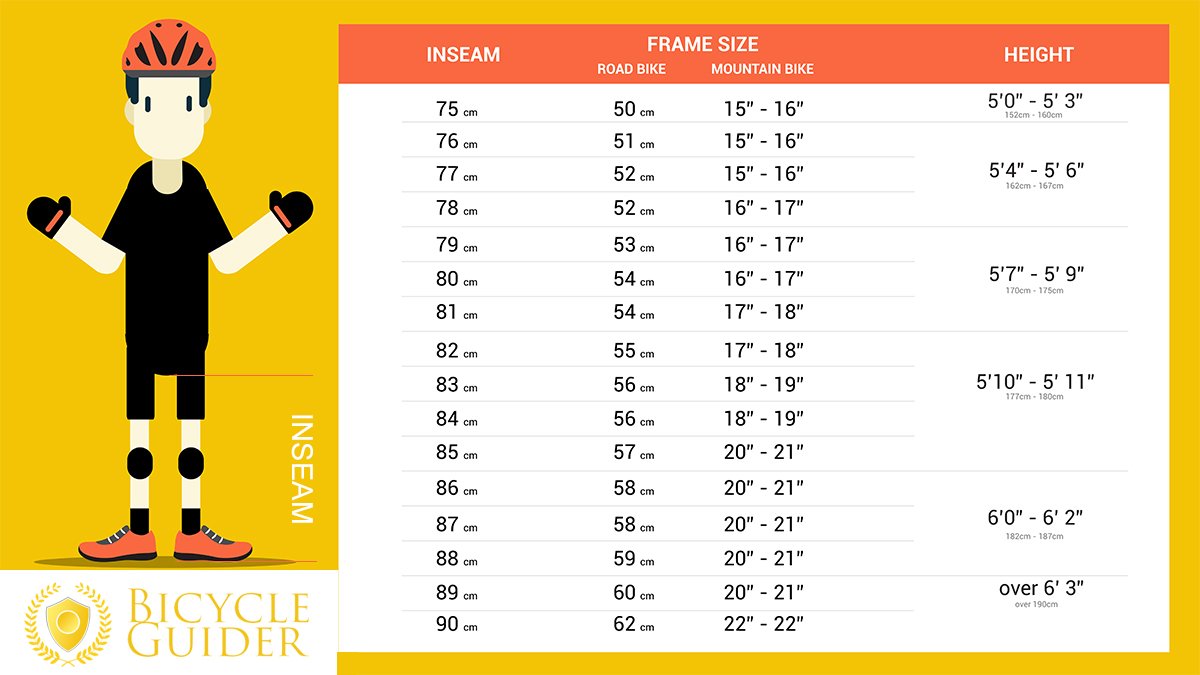
MTB, E-MTB & Fatbike Size Chart
Don’t rely on S/M/L labels—they vary widely by brand.
Size mountain bikes by measurements: start with reach and stack, then confirm effective top tube and standover in the brand’s geometry chart.
Hardtails and full-suspension bikes can feel different at the same “size” (full-suspension often a touch shorter in feel due to suspension design and sag), so compare the numbers, not the letters. With modern geometries, tube lengths alone aren’t useful.
Use the chart below to match your bike size for height with the recommended mountain bike frame measurements, keeping in mind that geometry can differ slightly between brands and between hardtail and full-suspension models.
MTB, E-MTB & Fatbike Size Chart
| Frame Size (in) | Alpha Size | Rider Height (ft/in) | Rider Height (cm) | Leg Inseam (in) | Leg Inseam (cm) |
|---|---|---|---|---|---|
| < 14″ | XS | 4’10″–5’1″ | 148–158 cm | 24″–29″ | 61–73 cm |
| 15″–16″ | S | 5’1″–5’5″ | 158–168 cm | 25″–30″ | 63–76 cm |
| 16″–17″ | M | 5’5″–5’9″ | 168–178 cm | 26″–31″ | 66–78 cm |
| 17″–18″ | L | 5’9″–6’0″ | 178–185 cm | 27″–32″ | 68–81 cm |
| 18″–19″ | XL | 6’0″–6’3″ | 185–193 cm | 28″–33″ | 71–83 cm |
| 19″+ | XXL | 6’1″–6’6″ | 193–198 cm | 29″–34″ | 73–86 cm |
This gives you a good ballpark reference, but geometry can differ between brands, so it’s always worth checking the specific model chart for the best fit.
What About MTB Wheel Sizes?
Mountain bikes today come in three main wheel sizes: 26″, 27.5″, and 29″. The older 26″ size is now rare but still offers a very agile, playful feel for smaller riders. Most modern bikes use 27.5″ or 29″, and your choice depends on both height and riding style.
- Smaller riders often find 27.5″ wheels easier to handle and more responsive on twisty trails.
- Taller riders usually benefit from 29″ wheels, which improve stability, roll over obstacles smoothly, and keep speed better.
- 26″ wheels may still appeal to riders who want maximum maneuverability and quick handling, though they’re less common today.
In general, larger wheels provide smoother handling at speed and better efficiency, while smaller wheels favor sharp handling and agility. Beginners can safely follow the first option in the chart, while advanced riders might experiment with different sizes to match their style. The best way to judge handling for your height and skills is to test ride and compare.
When to Size Up or Down on a Mountain Bike
If you fall between two mountain bike sizes, think about your riding style.
- Size up if you want more stability at speed, better traction on climbs, or extra room in the cockpit.
- Size down if you prefer quicker handling, a more playful ride, or a slightly lighter bike for technical trails.
Geometry varies by brand, so always compare charts and, if possible, test ride both sizes to feel the difference.
Why Do Mountain Bikes Have So Many Specifics in Frame Measuring?
In the early days, MTBs were sized by seat tube length, which gave a fair idea of standover height.
That worked when frames were simple and close to road bike geometry. As designs changed—sloping top tubes, dropper posts, longer wheelbases—the seat tube stopped being a reliable guide.
Today, brands usually assign a frame size (XS, S, M, L, etc.), but these sizes don’t always match across companies. That’s why geometry charts list extra numbers like reach and stack. While you don’t measure these yourself at home, they let you compare how different bikes in the same “size” will actually feel.
Start with the frame size for your height and inseam, then use reach and stack to fine-tune which brand’s sizing works best for you.
Hybrid / E-Hybrid / City / Commuter Bike Size Chart
Hybrid bikes, such as commuters and fitness models, are versatile and usually budget-friendly.
Most brands list them in Small, Medium, or Large sizes, but some still use inches for frame measurements. Because sizing can vary, it’s best to check the geometry chart for each model.
Start with your height as a guide, then fine-tune the fit with adjustments like saddle height or stem length.
| Frame Size (in/cm + Alpha) | Rider Height | Leg Inseam |
|---|---|---|
| 14″ / ~47 cm — XS | 4’10″–5’1″ 147–155 cm | 24″–29″ 61–73 cm |
| 15″ / ~48 cm — S | 5’1″–5’5″ 155–165 cm | 25″–30″ 63–76 cm |
| 16″ / ~50 cm — M | 5’5″–5’9″ 165–175 cm | 26″–31″ 66–78 cm |
| 17″ / ~52 cm — L | 5’9″–6’0″ 175–183 cm | 27″–32″ 68–81 cm |
| 18″ / ~54 cm — XL | 6’0″–6’3″ 183–191 cm | 28″–33″ 71–83 cm |
| 19″ / ~56 cm — XXL | 6’3″–6’6″ 191–198 cm | 29″–34″ 73–86 cm |
Use this as a ballpark reference—geometry can vary across brands, so double-check specific model charts.
Size up when:
- You have long arms or legs and want more reach.
- You ride long distances and prefer a stretched, aerodynamic position.
- You want extra stability at higher speeds.
Size down when:
- You prefer a lighter, stiffer frame for sprinting.
- You like a more upright riding position.
- You want sharper handling for technical courses.
Kids & Junior Bike Size Chart
Kids’ bikes are sized by wheel diameter, which makes them easier to understand than adult bikes.
A 12-inch bike has 12-inch wheels, a 16-inch bike has 16-inch wheels, and so on. Height is the main factor, but age can be a useful guide too.
Always check that your child can stand over the frame comfortably and reach the handlebars and brakes with ease. Use the chart below as a starting point, then confirm the fit with an in-person test ride whenever possible.
| Tire Size | Age Range | Rider Height (ft/in) | Rider Height (cm) | Leg Inseam (in) | Leg Inseam (cm) |
|---|---|---|---|---|---|
| 10″ | 2 years | 2’9″–3’1″ | 85–90 cm | 12″–14″ | 30–35 cm |
| 12″ | 3–4 years | 3’1″–3’3″ | 90–100 cm | 14″–17″ | 35–42 cm |
| 14″ | 4–5 years | 3’3″–3’7″ | 100–110 cm | 16″–20″ | 40–50 cm |
| 16″ | 5–6 years | 3’7″–3’8″ | 110–115 cm | 18″–22″ | 45–50 cm |
| 18″ | 6–8 years | 3’8″–4’0″ | 115–120 cm | 20″–24″ | 50–60 cm |
| 20″ | 7–9 years | 4’0″–4’5″ | 120–135 cm | 22″–25″ | 55–63 cm |
| 24″ | 9–11 years | 4’5″–4’9″ | 135–145 cm | 24″–28″ | 60–72 cm |
| 26″ | 11–14 years+ | 5’0″+ | 145 cm+ | 28″+ | 72 cm+ |
This gives you a good ballpark reference, but geometry can differ between brands, so it’s always worth checking the specific model chart for the best fit.
What to Do if Your Child Is in Between Kids’ Bike Sizes
If your child sits between two sizes, consider:
- Growth: Sizing up can extend use, but only if they can touch the ground and reach the brakes.
- Confidence: Smaller bikes feel easier to handle, which helps new riders.
- Adjustability: Check seatpost and handlebar range—some bikes give room to grow without losing comfort.
Pick the bike your child feels safest and most confident on today.
What If I Got My Bike Size Wrong?
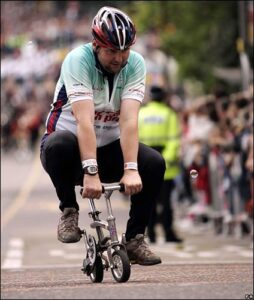 Then ask your merchant, if you can send your bike back to get the right one. If you don’t want to do that, then you can do the following things:
- Move your saddle to the front or rear
- Buy a longer or shorter stem. It changes your body position
- Buy a longer seat post
Consider also: JensonUSA fitting guide
Give it time to get the feeling right. I remember when I got my first 29er mountain bike. It felt like a ship and seemed difficult to ride in narrow trails of the forest.
Frequently Asked Questions
What size push bike do I need?
Push bikes are typically sold with 10" - 14" wheels. A 10-inch push bike will usually fit kids aged 18 months to 2 years; a 12-inch push bike will fit kids aged 2-4 years; while a 14" push bike will typically fit kids aged 3-5 years old. These are just general recommendations—for the best fit, consider your child's inseam length.
What size bike do I need for my height?
To find out what size bike you need for your height, you should consult a sizing chart for the type of bike you're interested in, such as road, mountain, or hybrid. Depending on the type, bike size charts will match your height to a corresponding frame size denoted in centimeters, inches, or general sizes (XS, S, M, L, XL).
Is a 26-inch bike for adults?
A 26-inch bike can be suitable both for adults and for kids, depending on the context. Kids' 26-inch bikes are suitable for teenagers and shorter adults. However, some adult bikes, such as touring bikes, fat bikes or electric bikes, also come with 26-inch wheels, but these have larger frames and are not suitable for children.
What height is a 26-inch bike good for?
A kids' 26-inch bike (a bike with 26-inch wheels) is typically suitable for teenagers and shorter adults who are around 5'0" to 5'3" tall. However, bikes for adults with 26-inch wheels, such as fat bikes or some electric bikes, are often available in a few frame sizes and might fit adults who are 6 feet in height and taller.
How do I know if a bike is too big or too small?
A bike is considered too big if you cannot stand over the frame with both feet flat on the ground without the top tube touching your crotch, or if you have to stretch too far forward to reach the handlebars. Conversely, it's considered too small if you feel cramped when riding, can't adjust the seat high enough, or your knees hit the handlebars when pedaling.
___ Inch bike for what size person?
To determine which bike size is suitable for a particular height range, consult a specialized bike size chart for the bike type you're interested in, such as our road, mountain, and hybrid size charts above. These charts match rider heights with appropriate bike sizes, allowing you to get a proper fit.
I’m looking for my first bike in decades. My momma had a custom made one n 2007/2008. I can’t think of the brand by the frame says ‘Allox Butted’ (I think, it’s half worn off) on it. It is a 7 speed bike. She is a few inches taller than I am, and have tried to ride it in the past and one foot always slips off the pedals. My uncle even removed the back light (as I would only be riding around my street during the day, when only a few cars come through all day) so he could lower the seat for me. This did not help any, and I still had the problem. When I was a pre-teen/teen (1990s) I had a 10 speeder that I fit on fine. Again, I can’t remember the name or anything but it was sold by the big box stores. My gramps had an old bike from the 1960s/1970s or so that I would ride to and from work with no issues and believe it was a road bike; I could be wrong though as it looks (just from photos) a lot like a Schwinn Wayfarer Retro Hybrid.
I’m not sure which type of bike I would need – as I would just be riding around the streets/sidewalks (I know you aren’t supposed to ride on sidewalks, I just don’t feel as safe in the streets) – but I like the grip on mountain bikes. Would I go for a hybrid bike? When standing are your feet supposed (or straddling the bike) to be flat on the ground? I’ve notice with the one my momma has (she doesn’t ride it which is why I was going to take it off her hands lol) I would always be on my tip-toes. Yet the other two bikes I mentioned, if I remember, my feet were flat on the ground when just standing/straddling the bike.
I am a female, 4’11-5’0 (149-152 cm) with an inseam of 24″ (58 cm). Thank you.
Hey Valerie! I think a cruiser would be a good fit for you. You can check out Electra Townie, we wrote about it here. I think it would be a good fit for your height and your requirements.
Otherwise, any hybrid/mountain bike with a 14″ frame and 26″ wheels would be a good match. When you’re off the saddle, your feet should be flat on the ground. However, when you’re sitting on the saddle, you should not be able to reach the ground without leaning the bike on the side a bit.
Hope that helps. 🙂
Jeff,
Thank you so much for the reply. I will check out the link you gave and copy the information as far as wheel size, etc goes so I know when I start looking offline. I thought my feet were supposed to be flat when standing but whenever I mentioned that, people just told me I was wrong and that just can’t balance right… and it never made sense lol. So happy I found your site 🙂
Happy I could help!
Jeff,
I have another question. I am looking to stay in the 250-300 price range but as I am still researching, etc that price may go up once I find something I like. You mentioned a 14″ frame and 26″ wheels. I am having a hard time finding a bike with both; on Amazon (for example) you can choose the wheel size but not the frame size. Even going by their sizing, that would be an XS frame, and I can’t even find the option to select frame size at all, just wheel size. Am I just not searching correctly, or would these be custom measurements?
It depends on which bike you’re looking at. Some have a one-size-fit-all frame and just differ in terms of wheel size. Getting the smallest frame available (whether it is XS or XXS) with 26″ wheels is a good way to go.
Hey Jeff,
I’m 5’9″ (right in the middle of two different sizes) and am trying to find a bike that would work both on paved roads and rougher gravel. No real intention of off-roading / mountain-biking. Do you have any sizing preferences? Should I go for the Medium or the large, since I’m in the middle?
I’m budgeting in the $500-700 arena (give or take a bit on either side) for a solid bike that fits my needs. Do you have a recommendation?
Thank you!
Hi Peter, a Large frame is definitely a better option for you since you’re in-between the two. As for recommendations, I think that any hybrid would meet your requirements. A gravel bike would be an even better match (such as Salsa Journeyman 650 Claris or Pure Cycles Gravel Adventure), but that’s slightly above your budget.
Hi..I would to buy a bicycle …my leg inseam is 75cm . I was riding a bicycle since 25 years and now I want to buy one. But I need it for a beginner and road bike. So what size should I buy for lady?
Hi Rima. I could have helped you more if you told me your height as well. But, judging by your inseam length, I’d say you should go for a 52-53 cm frame. Enjoy!
Hi I am 5″7 and an inseam of 29 I would like to start cycling for weight loss purpose. I am considering a hybrid. Your article is very helpful to help me find what I am looking for. I am basically starting out but my question is with me being overweight what size tires should I consider? My weight is over the 300 lb mark. Could you please help me to decide so I could start this new adventure.
Hi Kimberely. Almost all hybrids come with 700c wheels, so you should choose a model with wider tires, such as 40 mm and above. You can also consider some MTB model, they’re sturdier and will be able to carry 300 lb without any problems. 🙂
Hi Jeff,
I was thinking about getting a Cannondale Mountain bike. I was looking specifically at a trail 3 or 4. I am 5’9.5″ with a 32″ inseam. Their site says I should get a large but I am concerned about the standover height. The large has a standover height just over 32 inches. Should I be concerned about this? Am I definitely a Large? Should I be looking for another bike with a shorter standover height?
Thanks
Hey Matthew! I think you should get a Large. The standover clearance should not be an issue since you’ll be adding an inch to your inseam length when you put your shoes on. So you should have just enough. 🙂
I’m a 61 yr young male , 5’8 with a 28” inseam looking at a Specialized Turbo Como low entry…due to hip issue.
Would the small size fit? Or would you recommend large?
Thanks!
Hey Kelly! I believe an M-sized frame would be a good choice for you. L could work as well, but you might feel a bit too stretched out. 🙂
Casual rider – looking for a new bike. I am 5’1 with 29″ inseam. Can you advise on frame for me since I am petite?
Hi Joanna! If you’re planning to get a mountain bike, I recommend a 15″ frame. If you prefer a road bike, then a 50 cm frame would be a good fit. Enjoy riding! 🙂
Hi Jeff,
I am planning to get a Trek Dual Sport 2 (2020) but not sure about the size (will order online). I am just shy of 6″1′ (184 cm) tall, and inseam of about 34-35 inch. This is the first time I am buying a bike and not really sue how to get this right. Which one would you say I should go fo – L or XL? Thank you so much!
Hey Arber! I recommend choosing the bigger XL size since you’re right in-between two sizes. If you’re taller than 5’6″, it’s better choosing a bigger size when you’re in-between two. 🙂
Thanks Jeff! Guys at Trek suggested I go with XL, too. The order is in!
Cheers 🙂
Enjoy your new bike! 🙂
Hi Jeff,
I am 5’4″ with an inseam of 29.5 inches. I looking at hybrids or mountain bikes. I mainly want a bike to ride around neighborhood streets but be able to take occasionally on dirt trails at local parks. Can you suggest styles/brands (that are a good value) as well as sizes. I appreciate it!
Hi Kathleen! Please take a look at our recommendation for the Best Bikes for Commuting and Best Hybrid Bikes, we wrote about our favorite styles and brands. There are bikes of all price points and you can’t really go wrong whichever you choose. 🙂
Hi Jeff
I’m looking at a gravel bike. Cannondale or something equivalent. I’m 5’6″ with 29″ inseam, female in mid 40s. I cycle regularly but current have trek urban bike I take to work that’s 14″ 34.5cm. My mountain bike is old and uncomfortable and clearly not the right fit.
For road bike I feel like I’m somewhere between a small and med frame. Since getting a proper fit will be challenging with COVID19 restrictions, any recommendations on proper size. I’m anxious to get something and kicking myself I didn’t buy last fall.
Thanks! Beth
Hey Beth! Gravel bikes are sized similarly to road bikes. I believe a 54 cm frame would be the perfect fit for you. Btw, that 14″ frame is definitely too small for you! Have fun riding gravel! 🙂