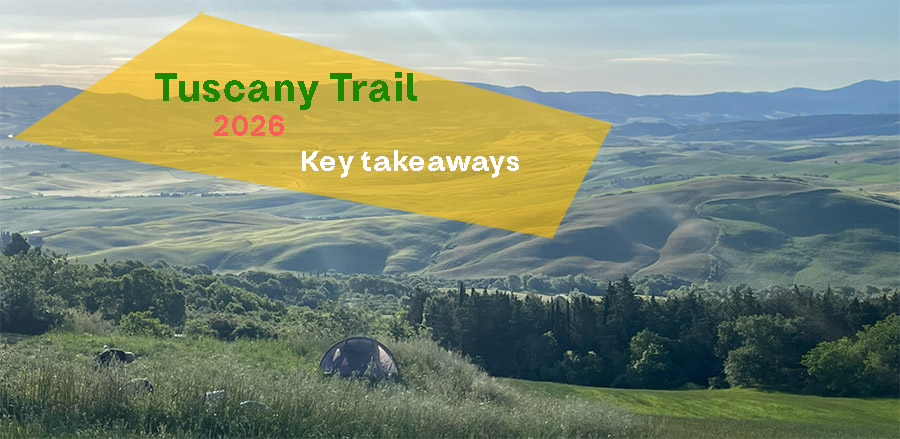
Earlier this year, I finally got the chance to ride the Tuscany Trail in Italy. Five days of cycling through beautiful Tuscan countryside, historic villages, steep hills, gravel roads and some unforgettable scenery.
It was a fantastic adventure, although not everything went quite as expected.
A few numbers from the trip:
- 6,000 participants
- 500 km (310 miles) of riding
- 5 days on the trail
- 3 nights at basecamps and 2 nights in B&Bs
- 1 flat tire (before the adventure even started!)
Everyone experiences an event like this differently. Some come for the challenge, others for the scenery and some just want to enjoy a few days of cycling with friends.
What Did I Bring?
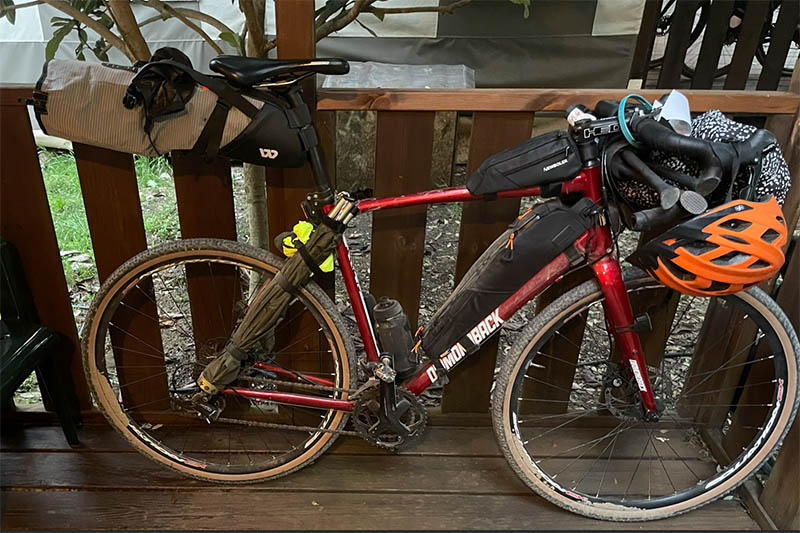
- Huge saddle bag
- 4-liter hydration backpack
- Small top tube bag for my phone and money
- Larger frame bag for spare parts, battery back, chargers, snacks, etc.
- Tarp, poles and nylon cord
- Sleeping bag
- Camping chair
Here are my biggest takeaways from the Tuscany Trail.
1. Take the Bike You Love and Invest in Good Tires
You don’t need the latest or most expensive gravel bike to enjoy the Tuscany Trail.
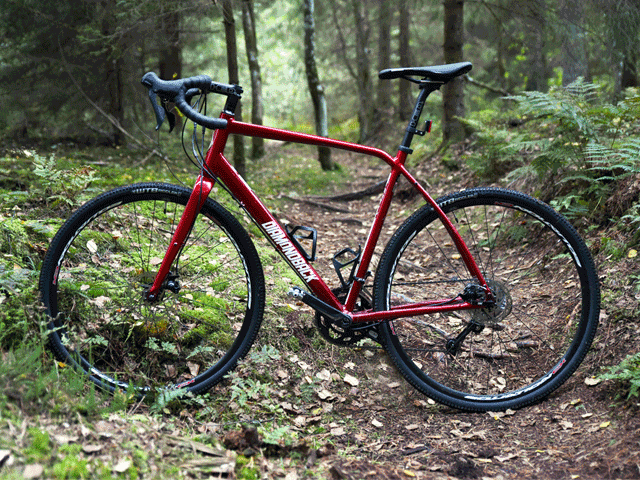
I rode my Diamondback Haanjo 3, a bike I originally tested back in 2018. And guess what? It performed really well!
With all the steep climbs, fast descents and rough gravel roads, having a bike you know and trust is more important than having the newest equipment.
2. Balance Your Bike Properly
How you distribute weight on your bike matters more than you might think, especially when riding hundreds of kilometers on gravel.
Before the trip, I ordered a fresh set of Maxxis Rambler 700×40 EXO Tanwall tires.
After 500 km (310 miles), the difference between the front and rear tires was surprising.
The rear tire had already lost around 50% of its tread, while the front tire still had some of those tiny rubber hairs left from the factory!
I was carrying most of my gear over the rear axle, along with hydration on my back. That put a lot of weight toward the rear of the bike.
The uneven tire wear was a pretty clear sign that my setup wasn’t ideally balanced, although rear tires naturally wear faster because they carry more load and transmit pedaling power.
My advice: Try to distribute your luggage more evenly between the front and rear of your bike. Don’t put everything on the rear rack or saddle bag.
A better-balanced bike can improve handling, especially on steep climbs and loose gravel descents. It may also help reduce excessive rear tire wear.
3. It Wasn’t as Easy or Slow-Paced as I Expected
Before arriving, I imagined the Tuscany Trail as a relatively relaxed cycling adventure. Lots of riders taking their time, stopping for long lunches, enjoying Italian wine and soaking up the atmosphere.
Well, that wasn’t quite what I experienced.
There were plenty of strong riders maintaining a surprisingly fast pace. Of course, you could ride as slowly as you wanted, but the overall atmosphere felt more energetic than I expected.
And the terrain certainly didn’t encourage an easy ride.
On some gravel roads, the dust was so thick that visibility was almost like riding through fog. That’s what you get when thousands of cyclists share dry gravel roads in beautiful weather!
4. Prepare for the Worst
Things can go wrong when you’re hundreds of kilometers into a bikepacking adventure. And sometimes, it’s not even your bike that lets you down.
My GPS died after spending too much time in the hot Tuscan sun. And it never came back to life!
Luckily, there are other ways to navigate, but losing your main GPS device in the middle of a 500 km adventure is far from ideal.
My advice: Always have a backup navigation option. Download the route to your phone, make sure the maps work offline and carry a power bank.
You never know which piece of equipment might decide to give up halfway through the trip.
5. The Climbs Were Steep, but the Descents Were Worth It
One thing became clear pretty quickly: Tuscany doesn’t believe in gentle climbs.
Some ascents were seriously steep. Whenever we spotted a castle or a beautiful hilltop village in the distance, we knew what was coming.
More climbing.
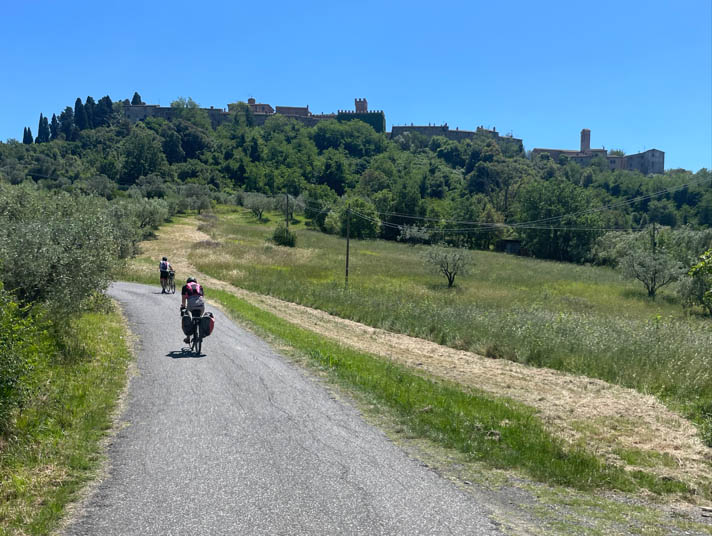
But the reward was usually worth the effort. Reaching those hilltops meant fantastic views across the Tuscan countryside, followed by some wonderful descents.
And those descents could be fast!
On paved roads, it was easy to reach 60 km/h (37 mph) and maintain high speeds for quite a while.
Make sure your brakes are in excellent condition before starting the Tuscany Trail. You’ll need them, especially with a loaded bike.
6. Long Stretches Between Shops and Water Stops
The Tuscany Trail is a self-supported bikepacking adventure, so you’re responsible for finding your own food, water and accommodation.
However, one thing surprised me.
There were plenty of small shops, cafés and bars along the route that riders simply didn’t know about.
And the funny thing was that some shop owners didn’t seem to know about the thousands of cyclists passing nearby either!
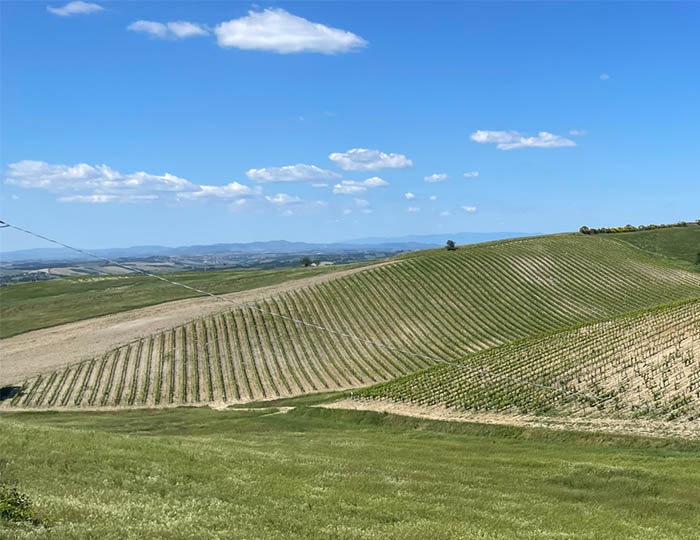
We discovered several wonderful little places just off the route. Some were hidden behind buildings or hedges, making them almost impossible to notice from the road.
These often turned out to be our favorite stops.
While everyone crowded into the same well-known cafés, we could enjoy a quiet coffee, a croissant or a cold drink just a short distance away.
My advice: Don’t rely entirely on the official route for finding places to eat and refill your bottles. Check the map for nearby villages and small businesses. Sometimes the best stop is only a few hundred meters away.
7. The Participants Were Incredibly Friendly and Helpful
One of the best things about the Tuscany Trail was the people.
At one point, our shifting cable broke in the middle of nowhere.
Almost immediately, other riders started stopping to ask whether we needed help. Several offered tools and assistance.
Unfortunately, nobody had a spare shifting cable.
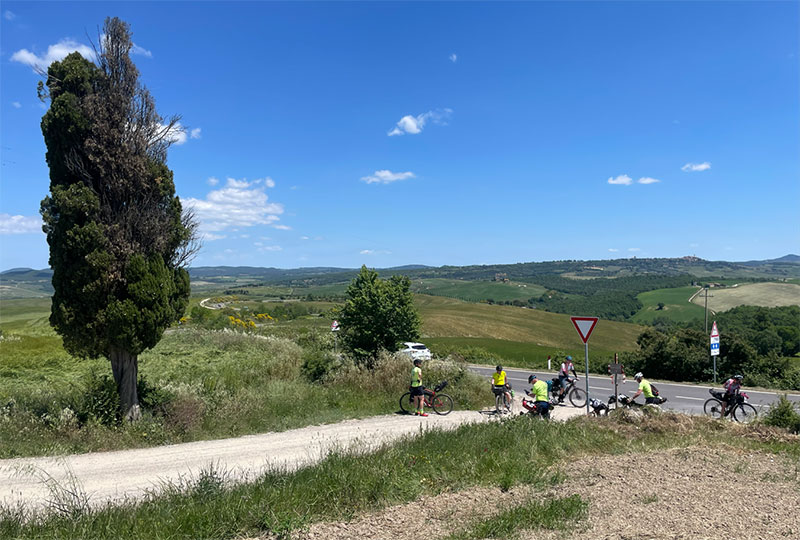
And just when things were looking rather hopeless, we discovered that a Decathlon store was only 4 km (2.5 miles) away!
What are the chances?
We managed to get the bike fixed fairly quickly and continued our adventure.
It was a good reminder that even though the Tuscany Trail is self-supported, you’re rarely completely alone.
There are thousands of other cyclists around, and most are more than willing to help.
8. The Tuscany Trail Organizers Could Do More for Local Businesses
This is one area where I think the Tuscany Trail team could improve.
With around 6,000 participants passing through the region, the event creates a fantastic opportunity for small local businesses.
But that opportunity isn’t always being used.
For example, one small shop marked on the official Tuscany Trail map had long queues of cyclists waiting outside.
Meanwhile, a unique little bar just 5 km away, hidden behind a hedge, had excellent beer, friendly service and absolutely no queues.
It was one of our favorite discoveries.
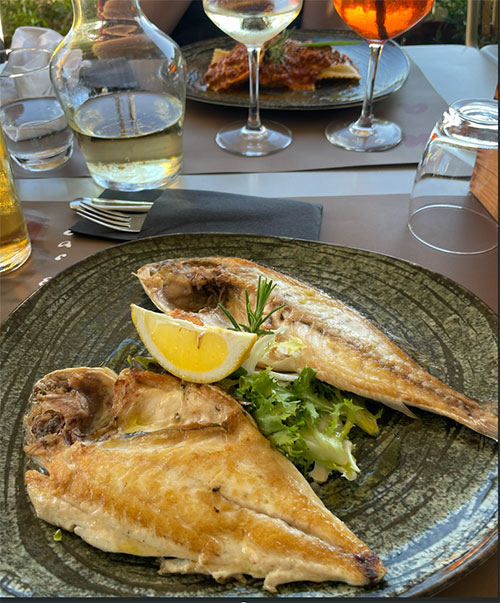
I believe the organizers could do more to communicate with local shop owners, cafés and bars along the route.
Even something as simple as a sign saying “Bar 200 meters ahead” could make a difference.
It would help riders find food and drinks, spread the crowds between more businesses and bring additional income to small communities.
Everyone would benefit.
9. The Most Random Shops Were Often the Best
Some of our most memorable stops weren’t planned at all.
A tiny café in a quiet village. A roadside bar we almost missed. A little shop selling coffee and fresh croissants.
These places had something that the busier stops often lacked: a relaxed atmosphere.
We could sit down, enjoy our food and watch everyday life in Tuscany without being surrounded by dozens of other cyclists.
And that’s one of the things I enjoyed most about the trip.
The Tuscany Trail isn’t just about covering 500 km. It’s also about discovering places you probably wouldn’t visit otherwise.
Sometimes it’s worth making a small detour.
10. Basecamp Facilities Were Disappointing
I understand that bikepacking is about adventure and that nobody expects luxury accommodation.
But some of the basecamp facilities were honestly disappointing.
At one location, there were just two improvised showers, with men and women showering in cold water while other participants waited in line.
There was practically no privacy.
Surely installing a few shower curtains wouldn’t be too difficult?
The showers were built on wooden pallets, with mud all around them. After a long day of cycling, the last thing you want is to stand barefoot in a muddy area while waiting for a cold shower.
At another basecamp, the shower was located about five muddy meters away from the water supply.
Again, a simple walkway or a few additional pallets would have made a big difference.
I’m not asking for five-star facilities. Just some basic comfort, cleanliness and privacy.
With thousands of participants, these things deserve more attention.
One interesting exception was the farmer’s toilet!
Unfortunately, I heard about it too late and never got to try it myself. From what others told me, it was quite an invention.
11. Some Basecamps Closed for the Night
Our preferred way of experiencing the Tuscany Trail was to ride during the day, spend the evening talking about our adventures and continue after a relatively short sleep.
We weren’t looking for a strict daily schedule.
Unfortunately, some basecamps closed their gates at night, which made this difficult.
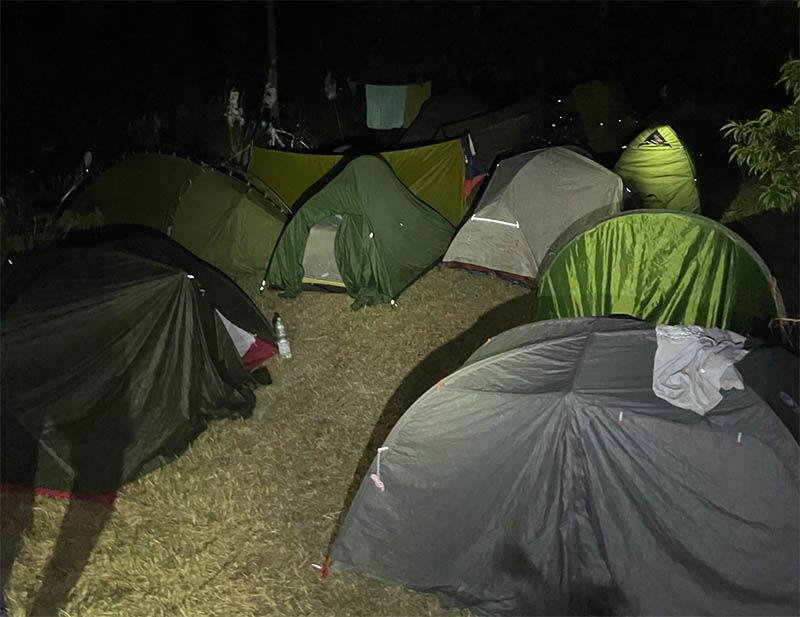
I understand that organizers need rules, but a little more flexibility would be welcome at a self-supported cycling event.
After all, part of the appeal is being able to decide when to ride, when to rest and how to organize your own adventure.
12. Bring Spare Parts and Know How to Use Them
If there’s one practical lesson I would share with anyone preparing for the Tuscany Trail, it’s this:
Bring spare parts and learn how to make basic repairs before you leave.
A few things I’d definitely recommend carrying:
- Spare derailleur hanger: I broke mine during the epilogue. It’s a small, lightweight part that can save your trip.
- Spare cables: Bring shifting and brake cables if your bike uses them. We learned this lesson the hard way.
- Extra brake pads: The combination of steep descents, dust and gravel can wear them down surprisingly quickly.
- Basic tools: Make sure you can actually use the tools you’re carrying.
I didn’t have to replace my brake pads during the trip, but I adjusted the brakes several times.
With all those long descents, properly functioning brakes are essential.
And don’t assume that another rider will have the exact spare part you need. As we discovered with our broken shifting cable, even thousands of cyclists can’t guarantee that!
13. Food at Basecamps Was a Mixed Experience
The food situation varied quite a bit between basecamps.
Castiglione d’Orcia was great. We enjoyed the food and the overall experience.
Prato d’Era, on the other hand, was less impressive.
There were two separate meals available, each costing €15. One was pasta and the other sausages.
The problem was that both portions were relatively small.
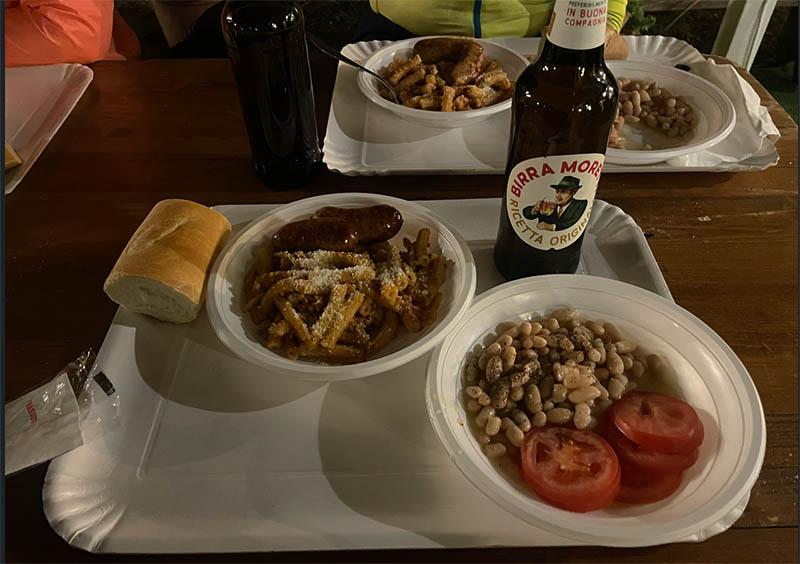
Paying €15 for a small plate of pasta and another €15 for sausages didn’t feel like particularly good value, especially after a long day of cycling.
I don’t think every meal needs to have a fixed €15 price.
A little more variety in portion sizes and prices would make sense. Some cyclists want a quick snack, while others need a proper meal after spending the whole day in the saddle.
And hungry cyclists can eat a lot!
14. Secure Your Flip-Flops!
One final piece of advice that might sound ridiculous:
Attach your flip-flops properly!
I’m not exaggerating when I say I saw at least 20 lost flip-flops scattered along the route.
Apparently, attaching them loosely to a bikepacking bag isn’t the best idea.
Somewhere in Tuscany, there must be a growing collection of single flip-flops waiting for their owners.
Use a proper strap or keep them inside your bag.
Would I Recommend the Tuscany Trail?
Absolutely YES!
Despite my criticism of some organizational details, the Tuscany Trail was a fantastic experience.
It was a wonderful way to discover Tuscany from a completely different perspective.
We rode through beautiful countryside, climbed to medieval villages, enjoyed spectacular views, found hidden cafés and met friendly people along the way.
There were difficult moments, mechanical problems, dusty roads and some less-than-perfect facilities.
But those are also the things that make an adventure memorable.
Months later, I still find myself thinking about the places we visited. Sometimes I even see those Tuscan landscapes in my dreams.
Would I Do It Again?
Probably not.
Not because I didn’t enjoy it. Quite the opposite.
There are simply so many other places I’d love to explore by bike, and I’d rather experience something new next time.
But if you’ve never ridden the Tuscany Trail, I would absolutely recommend putting it on your list.
It’s an adventure worth experiencing at least once.
For me, Tuscany Trail was unforgettable. But the next adventure is waiting somewhere else.