Figuring out what to wear cycling sounds easy until you actually have to do it.
At 75°F (24° C), there’s not much to think about. Put on your jersey and shorts and go ride. But what about 55°F (33° C?) Do you need a jacket? Are shorts still fine? And what should you wear when it’s 35°F but you know you’ll be sweating on the first climb?
We’ve all got it wrong at some point.
Wear too much and you’ll be soaked in sweat after 20 minutes. Wear too little and you’ll spend the entire ride thinking about your freezing fingers instead of enjoying the road.
The good news is that dressing for cycling gets pretty simple once you understand layers and know roughly what works at different temperatures.
Below, we’ll go from hot summer rides all the way down to below-freezing winter cycling. We’ll also look at wind and rain because 45°F (7° C) on a sunny day is very different from 45°F with rain blowing in your face.
Contents
- What Should You Wear Cycling?
- 90°F+ (32°C+): Keep It Light
- 80–90°F (27–32°C): Standard Summer Kit
- 70–80°F (21–27°C): Pretty Much Perfect
- 60–70°F (16–21°C): This Is Where It Gets Tricky
- 50–60°F (10–16°C): Start Layering
- 40–50°F (4–10°C): Time for Cold-Weather Cycling Clothes
- 30–40°F (-1–4°C): Proper Winter Riding
- Dressing for Winter Cycling: Think in Three Layers
What Should You Wear Cycling?
If you just want to check the temperature and get on your bike, start here.
| Temperature | What to Wear Cycling |
|---|---|
| 90°F+ / 32°C+ | Lightweight jersey, bib shorts, thin socks |
| 80–90°F / 27–32°C | Short-sleeve jersey, bib shorts, summer socks |
| 70–80°F / 21–27°C | Short-sleeve jersey and bib shorts |
| 60–70°F / 16–21°C | Jersey and shorts, optional arm warmers or base layer |
| 50–60°F / 10–16°C | Jersey, base layer, arm warmers, knee/leg warmers, light gloves |
| 40–50°F / 4–10°C | Thermal jersey or jacket, tights, full-finger gloves, shoe covers |
| 30–40°F / -1–4°C | Thermal base layer, winter jacket, thermal tights, warm gloves, shoe covers, skullcap |
| 20–30°F / -7–-1°C | Winter layers, thermal tights, insulated gloves and shoes, balaclava |
| Below 20°F / -7°C | Heavy winter clothing with good wind protection for your hands, feet and face |
Don’t take this table too literally.
Some riders are still happily wearing shorts at 55°F while others have already pulled out their winter tights. Your pace makes a difference too. A hard training ride produces much more body heat than an easy Sunday spin.
Use the table as a starting point, then adjust it based on what works for you.
90°F+ (32°C+): Keep It Light
When it’s this hot, you don’t need much.
Wear your lightest short-sleeve cycling jersey, bib shorts and thin socks. That’s about it.
A jersey with a full-length zipper is useful because you can open it on a long climb when you’re cooking. Well-ventilated shoes also make more difference than you might expect.
And don’t forget sunscreen.
Your arms, legs and the back of your neck can spend several hours in direct sunlight on a long ride. Sunglasses are a good idea too, both for UV protection and because getting a bug in your eye at 25 mph isn’t much fun.
At these temperatures, hydration is far more important than finding some magical piece of summer cycling clothing.
80–90°F (27–32°C): Standard Summer Kit
This one’s easy.
A short-sleeve jersey, bib shorts and lightweight cycling socks are all most riders need.
Look for breathable synthetic fabrics rather than cotton. Cotton is fine for walking around town, but once it gets soaked with sweat it stays wet and gets uncomfortable quickly.
If you’re going out for several hours, think about sun protection and how much water you’ll need.
Otherwise, don’t overcomplicate it.
70–80°F (21–27°C): Pretty Much Perfect
For many cyclists, this is about as good as it gets.
Jersey. Bib shorts. Socks. Shoes.
Done.
You probably don’t need to carry extra clothing unless you’re heading into the mountains or expect the temperature to fall later.
Long descents are the exception. You might be sweating at the top of a climb and freezing five minutes later while descending at 35 mph.
A tiny packable vest can be worth its weight in gold in that situation.
60–70°F (16–21°C): This Is Where It Gets Tricky
 At 68°F, you’ll probably be happy in your normal summer kit.
At 60°F, maybe not.
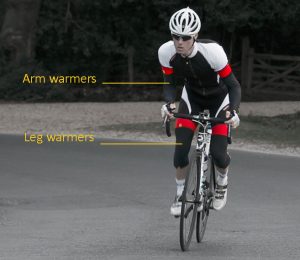
This is where arm warmers become one of the best things you can own as a cyclist. Put them on when you leave in the morning and pull them off once you warm up. They’ll easily fit in a jersey pocket.
A thin base layer is another option.
Your legs will usually be fine in bib shorts, although knee warmers are nice toward the bottom of this temperature range.
If it’s windy, add a lightweight vest.
And remember: 60°F in sunshine can feel great. The same temperature under gray skies with a strong headwind can feel surprisingly cold.
50–60°F (10–16°C): Start Layering
Now we’re getting into proper cool-weather cycling.
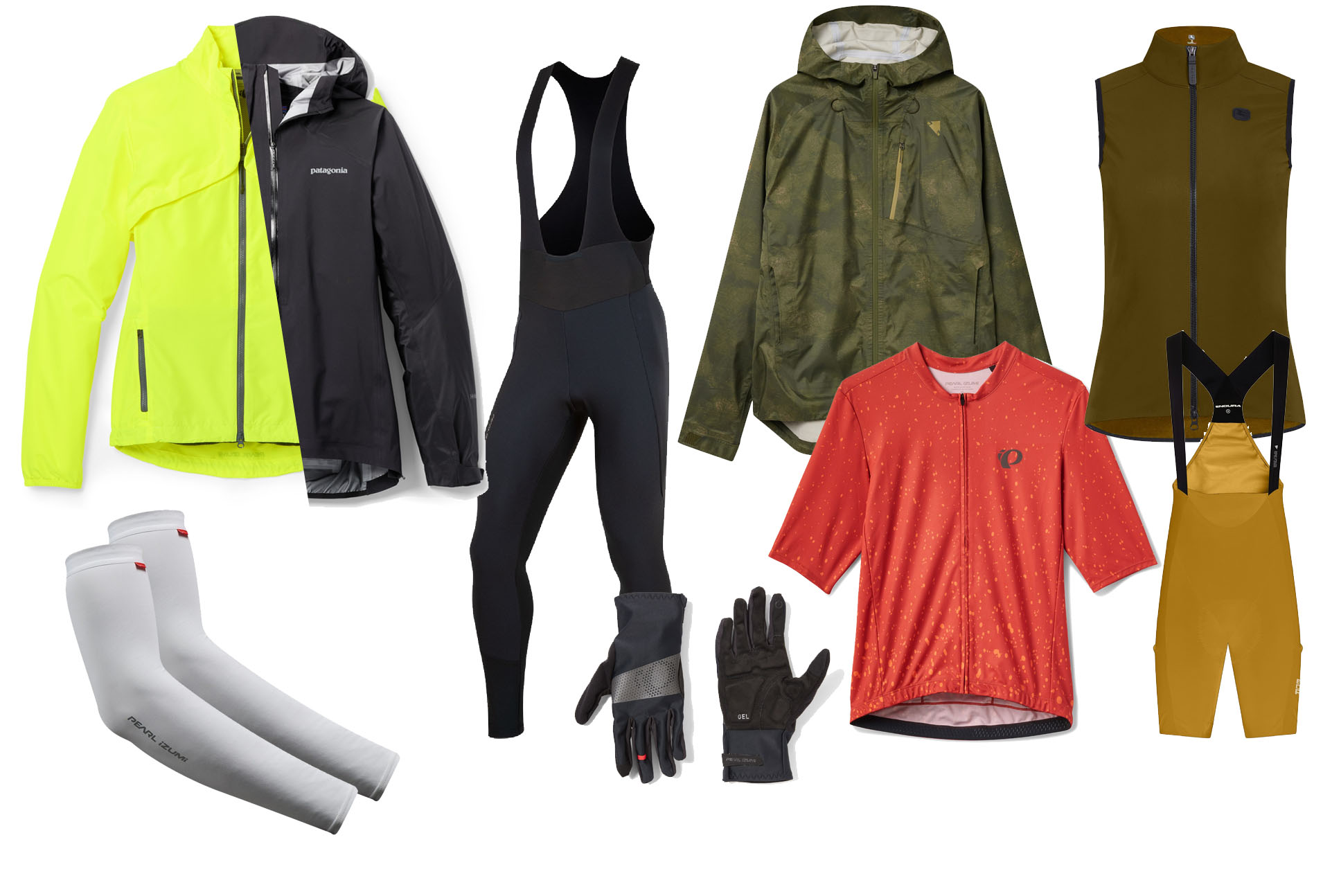
You don’t necessarily need a winter jacket yet. Instead, start combining lighter pieces.
A good setup might be:
- thin base layer
- short or long-sleeve jersey
- arm warmers
- bib shorts with knee or leg warmers
- light full-finger gloves
- wind vest
The big advantage is that you can remove things.
Say you leave home at 8 a.m. when it’s 50°F and finish three hours later at 60°F. A heavy jacket that felt great for the first half hour can become annoying pretty quickly.
Arm warmers, leg warmers and a vest solve that problem.
They also fit in your pockets when you no longer need them.
40–50°F (4–10°C): Time for Cold-Weather Cycling Clothes
Below 50°F, most riders will want to cover their arms and legs completely.
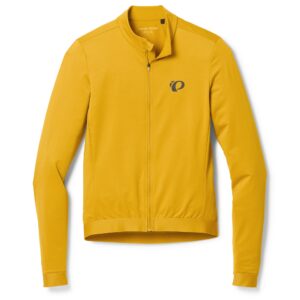
A long-sleeve thermal jersey over a base layer works well toward the warmer end of this range. As you get closer to 40°F, a proper cycling jacket starts making more sense.
For your legs, use thermal bib tights or bib shorts with leg warmers.
Don’t ignore your hands and feet.
You can have a perfectly warm torso and still have a miserable ride because your fingers are numb.
Full-finger gloves should be standard at this point. Toe covers or full shoe covers are also worth using, especially if it’s windy.
A thin cycling cap or skullcap under your helmet will keep your ears warm without messing up the helmet fit.
One Simple Rule: Don’t Leave Home Feeling Warm
This sounds wrong, but it works.
If you’re standing beside your bike on a 40°F morning feeling perfectly warm and cozy, you’re probably wearing too much.
You’ll produce a lot of heat once you start pedaling.
Ideally, you should feel a little cool during the first five or ten minutes. Once you’re warmed up, you’ll be comfortable.
There are exceptions, of course. If you’re going for a very easy ride, you’ll need more clothing than you would for hard intervals.
But for most normal rides, slightly cold at the start is better than sweating inside three layers ten minutes later.
30–40°F (-1–4°C): Proper Winter Riding
This is where your summer kit disappears into the closet.
Start with a thermal base layer. Add a warm long-sleeve jersey and a winter cycling jacket.
Thermal bib tights are the obvious choice for your legs.
Then pay attention to the bits that usually get cold first:
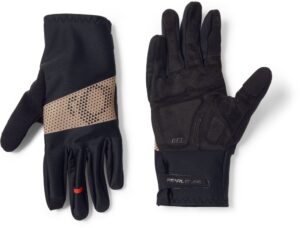
Hands: Insulated full-finger gloves.
Feet: Warm socks and full shoe covers. Winter cycling shoes are even better if you ride regularly in these temperatures.
Head: A thin skullcap or winter cycling cap that covers your ears.
Neck: A neck gaiter makes a surprisingly big difference and takes almost no space.
One mistake to avoid is putting your thickest socks inside already-tight cycling shoes.
If your shoes squeeze your feet, circulation gets worse and your toes may actually get colder, not warmer.
Give them some room.
Dressing for Winter Cycling: Think in Three Layers
You don’t need a huge puffy jacket to ride through winter.
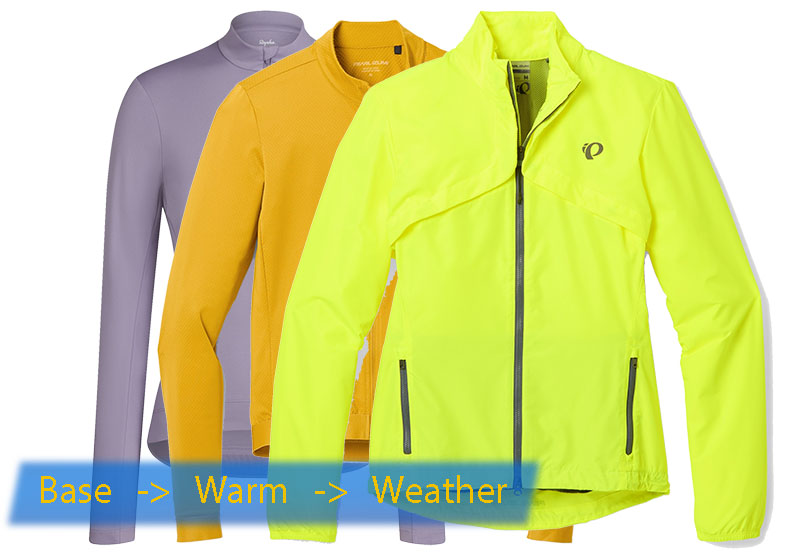
A good cold-weather cycling setup is usually made from three simple layers.
1. Base layer
This sits against your skin and moves sweat away from your body.
2. Warm layer
Usually a thermal jersey or similar insulating layer. Its job is to keep some of the heat your body is producing.
3. Wind/weather layer
This is your cycling jacket. Its main job isn’t always to make you warmer. It’s to stop cold air from cutting straight through everything underneath.
That last point is important.
You’re creating wind every time you ride. Even on a completely calm day, riding at 20 mph means you’ve effectively got a 20 mph wind hitting you.
That’s why wind protection matters so much when choosing cycling clothes for cold weather.
And the nice thing about layers?
You can unzip them, remove them or add them as conditions change.